
Introduction: Why This Controversy Matters for Panda Publishing Agency
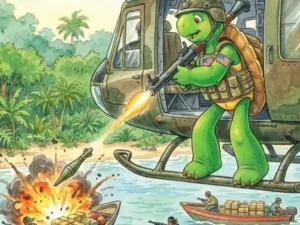
Screenshot from Pete Hegseth’s X account.
The recent Franklin the Turtle controversy, which made headlines across major U.S. media outlets, has become one of the most unexpected but important case studies for modern authors. When Defense Secretary Pete Hegseth shared an image online showing Franklin—the gentle, iconic children’s character—firing a machine gun from a helicopter, the publishing world reacted instantly. Kids Can Press, Franklin’s publisher, publicly condemned the unauthorized and violent use of the character.
For authors—especially those in children’s book publishing—this controversy is more than just a viral moment. It speaks to something much bigger:
- Your book characters are assets.
- Your brand reputation can be damaged without your consent.
- Your intellectual property must be protected before problems arise.
This incident is a powerful reminder that character protection is no longer optional—it’s a business requirement in today’s digital, AI-driven environment.
To understand how to protect your book and author brand from misuse, it helps to start early with the right publishing foundation. Learn more about the traditional publishing process.
What Happened with Franklin the Turtle? (Simple, Neutral Recap)
Here’s what actually happened—without political commentary:
- A high-profile U.S. government official shared an edited image of Franklin the Turtle, depicting him shooting at drug boats.
- Major news outlets reported the story because Franklin is widely known for promoting kindness, empathy, and peaceful problem-solving.
- The publisher, Kids Can Press, issued a strong public statement condemning the unauthorized, violent, and brand-damaging use of the character.
Why did the publisher respond so firmly?
Because once a character becomes associated with something outside its intended image—violence, political content, controversy, adult themes—it can irreversibly change public perception.
This is especially crucial in children’s book publishing, where trust and values are everything.
Why Publishers Protect Their Characters: A Core Part of Book Publishing
Book publishers—traditional or self-publishing partners—take character protection seriously for several reasons:
1. Characters Are Intellectual Property
A character isn’t just part of the story; it’s a trademarkable brand asset.
Think of:
- Harry Potter
- Dora the Explorer
- The Very Hungry Caterpillar
These characters earned millions in licensing, merchandise, and franchise deals.
2. Misrepresentation Confuses Readers
Children’s books survive on credibility.
If parents start seeing a gentle character used in violent or political memes, trust erodes fast.
3. Publishers Must Defend Their Rights
If a publisher doesn’t respond to unauthorized use, they risk weakening their copyright or trademark protection.
To learn more about this legal and business concept, read about publishing rights and how they work.
Key Lessons for Authors: How to Protect Your Creative Work
4.1 Copyright Basics for Authors
Copyright protection starts the moment you create your story, but formally registering it strengthens your legal rights.
Authors should know:
- Copyright prevents others from using your characters without permission.
- It protects your handwritten ideas, illustrations, plot, and narrative.
- If someone creates an unauthorized meme, image, or illustration using your character, you have legal grounds to respond.
To ensure you’re protected at every step, consider working with a self-publishing agency that understands copyright.
4.2 When to Trademark Your Book Characters or Series
Copyright and trademark are different:
- Copyright = Your writing and artwork
- Trademark = Your character’s name, logo, series title, or franchise identity
You should consider trademarking if:
- You plan to publish multiple books in a series
- You want to create merchandise or licensing opportunities
- Your character is central to your brand (common in children’s books)
This strategy is why franchises like:
- Peppa Pig
- Clifford the Big Red Dog
- Paw Patrol
have strong brand protection across all media.
If you’re a new author—especially in children’s book publishing—learn more through this step-by-step guide for new children’s authors.
4.3 Monitoring Your Book’s Use Online
Digital misuse is now one of the fastest-growing issues for authors.
As technology evolves, you must stay vigilant about:
- AI-generated images using your characters
- Fan art or memes that cross into harmful territory
- Social media edits that distort your character’s personality or values
- Unauthorized Kindle uploads or pirated PDFs
A self-publishing agency can help you monitor, report, and respond—learn how a self-publishing agency can help protect your author brand.
How Misuse of a Character Can Damage Your Author Brand
Even one viral image—like the Franklin controversy—can cause:
Brand Confusion
Readers may think you approved the altered image.
Loss of Trust
Parents and educators are extremely careful about the content they purchase for children.
Damage to Long-Term Sales
If your character becomes associated with controversy or negativity, it can impact:
- Book reviews
- School/library sales
- Future book launches
- Your reputation as an author
To strengthen your long-term success, learn how to start turning your book into a strong, marketable product → [How to Make Your Book a Best Seller on Amazon (Even Without a Big Budget)].
What to Do If Someone Uses Your Character Without Permission
If you encounter unauthorized use online or offline, here’s the general non-legal approach:
1. Send a Cease-and-Desist (Professionally Written)
A formal notice often resolves the issue quickly.
2. File a DMCA Takedown
Platforms like Amazon, Facebook, Instagram, and TikTok offer fast removal tools for copyright violations.
3. Contact the Website or Platform Directly
Most have dedicated reporting systems for intellectual property infringement.
4. Document Everything
Screenshots, dates, URLs—keep records in case escalation is required.
For more on staying safe in the publishing world, read about common publishing scams and how to stay safe.
How Panda Publishing Agency Helps Authors Protect Their Work
Panda Publishing Agency isn’t just a publishing service provider—we help authors build a secure, powerful, long-lasting author brand.
Here’s how:
Brand Building & Positioning
We help you create a consistent visual and narrative identity that strengthens how your characters are perceived.
Full-Service Publishing Support
From editing to formatting to cover design, we protect the integrity of your story at every stage.
Copyright & IP Guidance
We make sure your work is protected before it hits the market.
Marketing & Reputation Protection
We help authors navigate online visibility, brand growth, and character safeguarding.
Learn why Panda Publishing is the trusted self-publishing agency for thousands of authors → [Why Panda Publishing Agency Stands Apart].
See how we’re also simplifying the publishing process for authors.
Final Thoughts
The Franklin the Turtle incident is more than a trending news story. It’s a reminder that:
- Your characters represent your values
- Misuse can spread fast
- Your intellectual property must be actively protected
As an author, you deserve to feel confident that your work—and your reputation—are safe.
If you want expert support in publishing, protecting, and growing your book, Panda Publishing Agency is here to guide you every step of the way.